
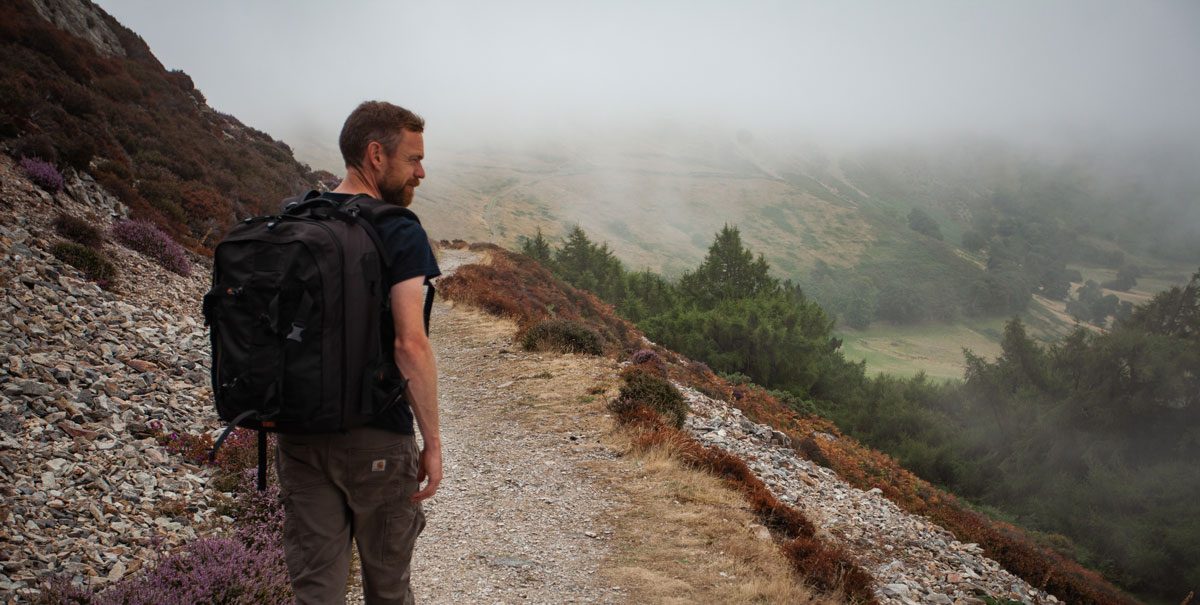
Walking the Great Orme above Llandudno
Llandudno’s Landmark

Walking the
Great Orme.

A limestone headland rising 207 metres above the Irish Sea — with routes for every level, wildlife found nowhere else on earth, and views that reach Anglesey, the Carneddau and beyond.

The Flagship Walk

Wales' most iconic limestone headland.


The Great Orme (Welsh: Y Gogarth) is Llandudno’s defining feature — a vast Carboniferous limestone headland jutting into the Irish Sea. The headland holds a rare quintuple designation: Country Park, Local Nature Reserve, Site of Special Scientific Interest, Special Area of Conservation and Heritage Coast.

The summit stands at 679 feet (207 metres) and can be reached by several walking routes, by the Great Orme Tramway — Britain’s only cable-hauled street tramway, running since 1902 — or by the Llandudno Cable Car, the UK’s longest aerial cabin lift.

The Routes

Walks on the Great Orme

The Iconic Route

Marine Drive Circuit

4 miles 2–3.5 hrs Easy

The Marine Drive is the Great Orme’s most celebrated walk — a 4-mile toll road that circumnavigates the entire headland at cliff-top level, with the sea below you for much of the route. Walkers and cyclists travel it free; cars pay a toll.

The route passes the 1862 lighthouse (decommissioned 1985, now a B&B), the Rest and Be Thankful Café — a welcome halfway stop — and dramatic clifftop views toward the Little Orme and Penrhyn Bay. From the Marine Drive you are well placed to spot grey seals hauled out on the rocks below, and seabirds nesting on the limestone cliff faces.

Start: Marine Drive toll gate, West Shore end (LL30 2LP) or North Shore end opposite Happy Valley.

Three Official Routes

Summit Trails

Conwy County Borough Council maintain three waymarked trails from the town to the summit, each with a distinct character. All are suitable for reasonably fit walkers and take between 30 and 60 minutes to reach the top.

Happy Valley Trail

1.5 mi~1 hrModerate

Starts from Happy Valley Gardens above the pier — the former quarry gifted to the town by Lord Mostyn for Queen Victoria's Golden Jubilee in 1887. The most popular route to the summit.

Haulfre Gardens Trail

1 mi45–60 minEasy/Mod

Begins from the south-facing terraced Victorian gardens off Cwlach Road. A quieter, more sheltered approach with lovely garden-level walking at the start.

Zig Zag Trail

1 mi45–60 minModerate

Follows the historic Victorian "Invalids' Walk" — a series of engineered zigzags originally designed to allow Victorian convalescents to reach the healthful summit air.

Longer Circuits

Nature & History Trails

Great Orme Nature Trail

4 miles2–2.5 hrsEasy/Mod

A longer circuit taking in the full sweep of the headland’s limestone grassland, with interpretation panels covering the rare flora and fauna. The best route for spotting silver-studded blue butterflies in early summer and for longer Kashmiri goat encounters.

Great Orme Historical Trail

4.2 miles2–2.5 hrsEasy/Mod

Takes in the Bronze Age Copper Mines (Guinness World Record for the oldest publicly accessible metal mine, worked from around 1800 BC), the 6th-century St Tudno’s Church, an Iron Age hillfort at Pen y Dinas, and the mysterious Hwylfa’r Ceirw stone avenue.

Natural Wonders

Wildlife on the Great Orme

The Kashmiri Goats

The Great Orme’s most photographed residents are a herd of wild Kashmiri goats — around 120 strong — that roam freely across the headland. The herd descends from a pair gifted to King George IV, eventually presented by Queen Victoria to Lord Mostyn of Gloddaeth Hall in the late 19th century.

Since 1844, the herd has supplied regimental mascots for the Royal Welsh — currently Shenkin IV, captured in 2018. In March 2020, during the COVID lockdown, the goats famously descended into the empty streets of Llandudno and made headlines worldwide.

They’re habituated to people and easy to approach — but do not feed them.

Rare Species

  • Silver-studded Blue ButterflySub-species (Plebejus argus caernensis) found nowhere else on earth. On the wing mid-May to mid-June.
  • Wild CotoneasterCotoneaster cambricus — just six wild plants are known worldwide, all on the Great Orme. The rarest plant in Britain.
  • ChoughsWales holds around 75% of the UK chough population. The Great Orme is one of their strongholds.
  • SeabirdsGuillemots, razorbills, kittiwakes and fulmars nest on the cliff faces. Peregrines are regular visitors.
  • Grey SealsVisible from Marine Drive hauled out on the rocks below. Little Orme is a more reliable seal spot in autumn.

Further reading: RSPB North Wales — Great Orme

Getting There

From The Rosedene to the Orme

Book Direct — Best RateCheck Availability →
Text